Buyer guide
Planning a Bulk Pickleball Paddle Order
A complete order brief identifies the configuration, quantities, artwork versions, packaging, destination and approval record. Clear inputs make quotations easier to compare and reduce avoidable revisions.
Last updated
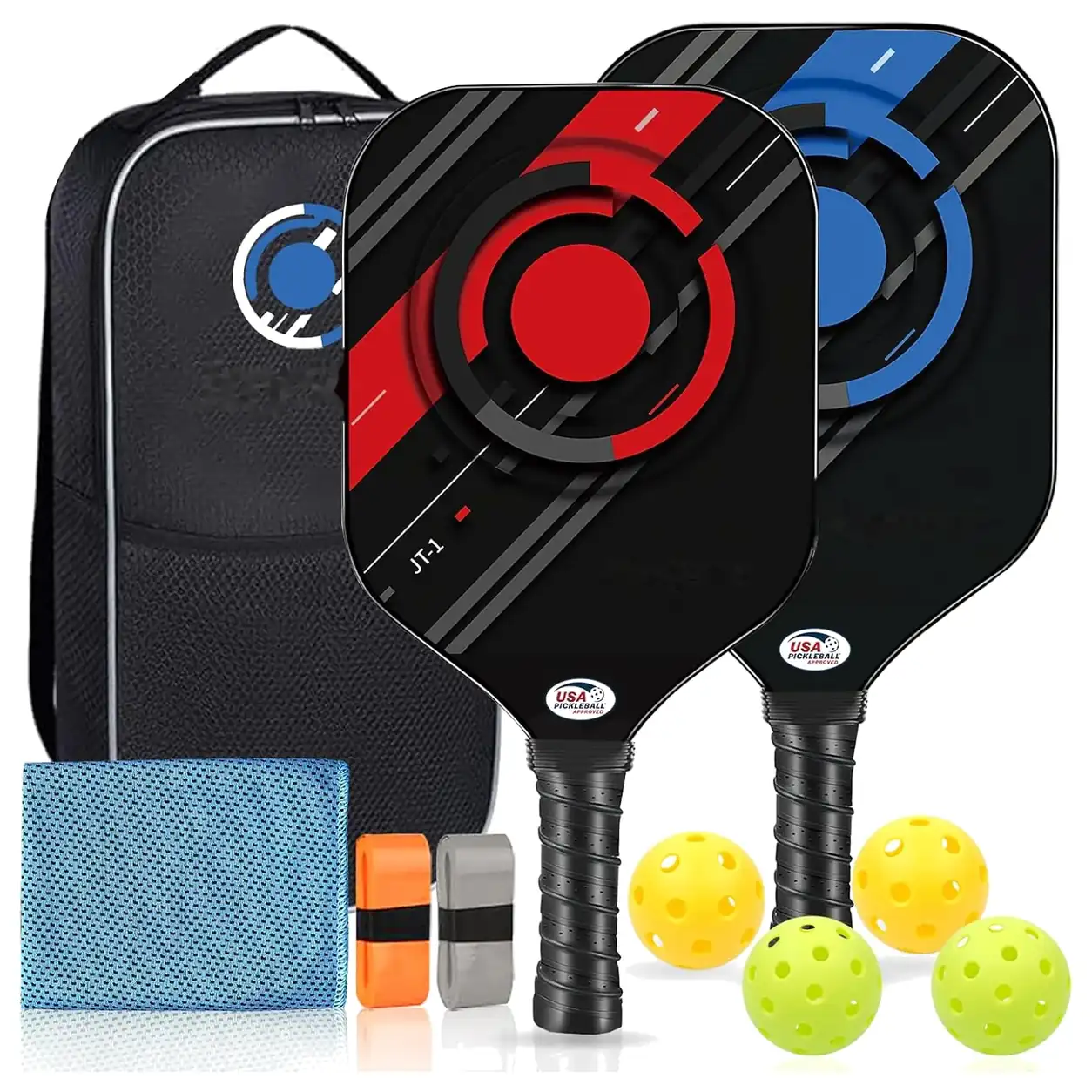
What a complete order brief contains
A bulk order goes smoothly when the brief answers every question before the factory asks it. The brief has six parts: the item schedule, the approved sample, artwork, packing, commercial terms and logistics. This guide covers each part and ends with a checklist you can copy. If you have not chosen a supplier yet, start with how to evaluate a paddle supplier.
Build the item schedule
List every line you are buying, one row per sellable item. A typical schedule looks like this:
| Line | Model and revision | Design / colour | Quantity | Pack |
|---|---|---|---|---|
| 1 | Spectra, 16 mm T300, hot-pressed | Nebula | 500 | Retail box |
| 2 | Spectra, 16 mm T300, hot-pressed | Inferno | 500 | Retail box |
| 3 | Arcus S1 set | Red | 300 | Set box |
| 4 | Overgrips (accessory) | White | 1,000 | Polybag, 3 per pack |
Keep sets, balls, covers and other accessories on their own lines, and mark whether the order is a first batch or a repeat. For repeats, quote the approved revision so nothing changes by accident.
Quantities, MOQ and mixing designs
Minimum order quantities usually apply per design and colour, because each artwork needs its own setup. Paddles that share one build can often be produced in the same run, which keeps a range with many designs economical; our Spectra range is one build in twelve artworks for that reason. Ask how MOQ applies to mixed designs before you split quantities, and check price breaks so you are not just below a cheaper tier.
Artwork and branding
- Supply vector artwork for each face, the edge guard, butt cap and grip, with colour references.
- State the print method you approved on the sample (UV or water-transfer printing).
- Give each artwork file a version number and put that number in the item schedule.
- Confirm who owns custom artwork and any custom mold.
Packing, labels and barcodes
Specify packing at three levels: the unit pack (polybag, sleeve, retail box or book-style box), the inner carton if any, and the master carton. For each, give quantity per pack, marks and labels. Retail buyers usually need a barcode (UPC or EAN) on every unit and carton labels showing item, quantity and carton number. Goods imported into the United States must be marked with their country of origin, so check the marking requirements of your destination. Our packaging page lists box and kit options.
Commercial terms and Incoterms
State the currency, the Incoterm and the delivery point you want quoted. Common terms are EXW (you collect at the factory), FOB (we deliver onto the vessel at the named port) and CIF or DDP (the seller arranges more of the transport). Under the Incoterms 2020 rules, the term decides who pays freight and insurance and where risk passes to you. Ask the supplier to confirm MOQ, payment terms, lead time and quotation validity on the same document. Our listed prices are EXW per paddle from 50 paddles per design, not quotes for your build and destination.
Shipping and documents
Small first orders often go by air or express; larger orders by sea, as a shared container (LCL) or a full container (FCL). Allow for transit time and customs clearance in your launch date. You will normally need a commercial invoice, a packing list and a transport document (bill of lading or air waybill). Check duties and any product requirements in your destination market with your customs broker before ordering.
Inspection and acceptance
Agree in advance how the order is accepted. Many buyers book a pre-shipment inspection using an AQL sampling plan (ISO 2859-1), with the approved sample as the reference. Define what counts as a critical, major and minor defect for your paddle (for example delamination, out-of-tolerance weight or a print error). Our quality and acceptance planning page explains how to set this up.
A typical order timeline
- Brief and quotation.
- Sample production and measured sample sheet.
- Sample approval and artwork sign-off.
- Deposit and production.
- Pre-shipment inspection and balance payment.
- Shipping and customs clearance.
Lead times depend on the build, quantity and artwork and are confirmed in each quotation. A revision after approval restarts the sample step for that item.
Planning repeat orders
A repeat order should be the easy one, but it is also where unnoticed changes creep in. Quote the approved revision and the previous order number, and ask the supplier to confirm that materials, core, outline and print method are unchanged. If anything has changed (a core revision, a new face supplier, a different grip), ask for a new sample before production. Keep a few paddles from each batch so you can compare batches later.
Common order mistakes
- Splitting quantities across too many designs, falling below MOQ or a price break.
- Approving artwork on screen without a printed sample.
- Leaving packing and barcodes until after production has started.
- Comparing quotes that use different Incoterms or exclude accessories.
- Ordering a repeat without confirming that the build is unchanged.
- Not deciding how the order will be accepted before it ships.
Copy-ready order checklist
- Item schedule with model, revision, design, quantity and pack for every line.
- Approved sample reference and measured sample sheet.
- Versioned artwork files for every design and component.
- Packing specification with barcodes and carton marks.
- Currency, Incoterm, destination and delivery window.
- Inspection plan and acceptance criteria.
Send the brief through our quotation page, and keep the agreed revision with your purchase order.
Frequently asked questions
What is a typical MOQ for custom pickleball paddles?
It depends on the build and artwork and is usually set per design and colour. Paddles that share one build can often be mixed in a run. Ask for MOQ and price breaks in the quotation.
What does FOB mean on a paddle quote?
Free On Board: the seller delivers the goods onto the vessel at the named port; freight, insurance and risk after that are yours, under the Incoterms 2020 rules.
Do pickleball paddles need a barcode?
Retailers usually require a UPC or EAN barcode on each unit and labels on each carton. Confirm your retailer's requirements.
Should I inspect before shipment?
It is good practice for bulk orders. A pre-shipment inspection with an AQL plan, against the approved sample, catches problems while they can still be fixed.
Can I mix designs in one order?
Yes, usually. Designs that share one build can often run together; MOQ normally applies per design and colour.